Most businesses should expect Instagram ads to cost about $5–$15 CPM, $0.50–$2.50 CPC, and $10–$80 per lead (often $30–$200+ in competitive niches). Your real cost is driven less by “budget size” and more by creative quality + offer strength + conversion rate, because those factors directly change your auction performance and what you pay per result.
After years of being an agency owner and managing seven-figure monthly spends, I can say with confidence that the auction is like a mirror reflecting your business economics.
In this guide, I’ll break down Instagram ads cost through benchmarks, structural drivers, and practical decision-making. Ready? Let’s dive in.
Struggling with growth? Explore our social media services.
The Instagram Ads Benchmarks (Core Table)
When clients ask me about Instagram advertising costs, they usually want one number. However, it’s not working that way.
The auction is efficiently governed by the "Total Value" formula. Meta weighs your bid against the Estimated Action Rate (EAR) and User Value.
As Andrew Foxwell has noted, most scaling issues are really creative problems in disguise. If your content resonates, the auction gives you a relevance discount, but if it is not a good fit, you pay a premium just to appear.
Here’s what’s happening consistently across accounts.
| Metric | Low Range | Average | High Range |
|---|---|---|---|
| CPC (Cost per Click) | $0.40 | $0.90 | $2.50+ |
| CPM (Cost per 1,000 Impressions) | $6 | $12 | $25+ |
| CPA (Cost per Conversion) | $8 | $25 | $80+ |
| CTR | 0.7% | 1.1% | 2%+ |
Instagram Ads Cost by Industry
| Industry | Avg CPC | Avg CPA | Competition Level |
|---|---|---|---|
| eCommerce | $0.70 | $20 | Medium |
| Finance | $2.20 | $90 | High |
| Real Estate | $1.80 | $60 | High |
| Beauty | $0.60 | $18 | Medium |
| SaaS | $1.50 | $75 | High |
The Biggest Factors That Decide Your Instagram Ad Costs
Honestly, there are many factors, and sometimes it’s really hard to explain things in simple words. However, some factors are so obvious that I could not miss them.
So, here we go:
Audience Demand and Competition
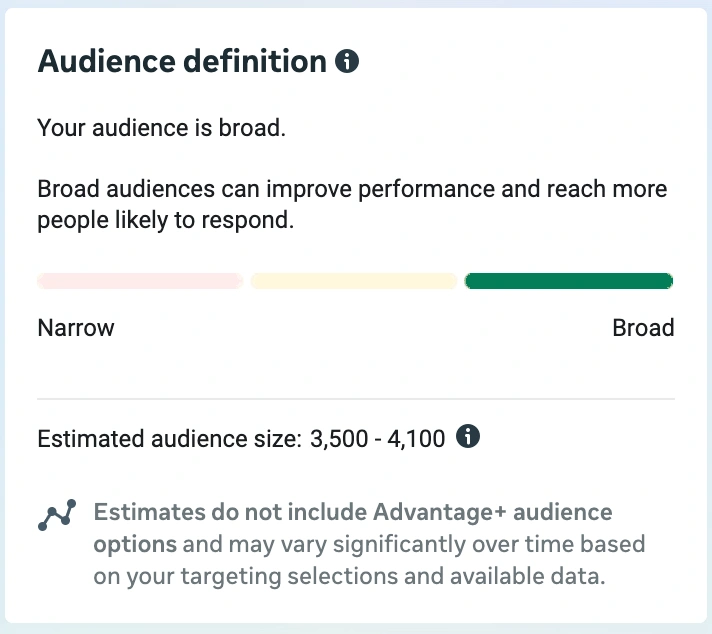
So, here’s something not everyone knows: Instagram’s auction rewards flexibility. When you restrict targeting with specific interests or small Lookalike (LAL) audiences, you narrow the available auction inventory.
The compression increases competition within a smaller pool, which can heighten CPM and lower delivery stability. For example, in the screenshot below, you see that the estimated audience size is very small, and I believe it will directly impact the CPM.
The same is everywhere (Not just Instagram). If you want to control your social media marketing budget, it’s very important to understand how to use Meta Ads Manager for maximum efficiency.
Remember!
Broad targeting (Age / Gender / Geography only) gives Meta’s system more room to identify high-probability users based on behavior signals. Over the past few years, I’ve noticed broader campaigns scale more smoothly and maintain more stable acquisition costs when creative and offer quality are strong.
Meta’s delivery system needs a consistent event flow to exit and stay out of the learning phase.
For example, if your ad set generates fewer than, say, 50 optimization events per week (according to Meta’s historical guideline), learning stability usually weakens. When learning destabilizes, delivery becomes volatile, resulting in fluctuating CPM, spiking CPA, and unpredictable performance.
Your Creative Quality and Refresh Speed
In the Andromeda era, creativity is the target. Meta’s neural networks now "scan" your video and static assets to understand the context before they even show them to a user.
If your ad has a low hook rate (i.e., under 20% of users stopping for the first 3 seconds), Meta determines the ad is a "Negative User Experience" and levies a penalty in the form of higher CPMs.
When it comes to refresh speed, winners fatigue in as little as 10 days at scale. If you aren't introducing at least 2–3 new concepts weekly, your video creation cost will be dwarfed by the rising CPAs caused by creative exhaustion.
Using AI ads video creation tools makes it easy to generate fresh concepts quickly and test multiple variations without adding production time.
Also read: Content Marketing Cost
Your Offer and Pricing
You cannot "ad buy" your way out of a conversion problem. The algorithm tracks post-click behavior; if users land on your site and bounce immediately because the price is uncompetitive or the offer is confusing, your Estimated Action Rate (EAR) drops.
Since Total Value = (Bid x EAR) + User Value, a low EAR forces your bid to increase just to maintain delivery.
Discount clarity, bundle positioning, financing options, and guarantees are what influence conversion probability far more than minor bid adjustments.
If your competitors can afford a $90 CPA because their average order value is $400, and yours is $120, you’re not competing on the same footing.
Scaling too slowly? Let’s accelerate it with our Instagram growth services
Landing Page Conversion Rate
Instagram ads cost becomes even more expensive when the click-to-conversion path breaks. Meta’s Conversions API (CAPI) creates a feedback loop between your website and the auction.
If your landing page has a conversion rate (CVR) of 1% while the industry average is 3%, the system identifies your user value as low.
The auction is smart enough to prioritize advertisers who provide a seamless user experience.
I regularly see brands obsess over audience layering while ignoring page speed, checkout friction, unclear messaging, or mismatched headlines. It’s worth knowing that improving post-click performance influences overall PPC cost more than micro-optimizing bids ever will.
Account History and Learning Stability
Meta’s Learning Phase is often misunderstood as a hurdle to clear, but it’s a diagnostic period for the AI. If you’re frequently changing a budget by more than 20% or swapping out creative mid-stream, it resets this phase and leads to volatile PPC cost spikes.
Across accounts I've worked on, the ones with a stable history get better pricing because the algorithm has signal certainty.
It knows who to target, which reduces the exploration spend that usually inflates the costs of newer or unstable accounts.
Instagram Ad Costs by Format Type
If you ask me, where your ad appears is often as important as what it says. Meta’s auction dynamics have shifted; now the algorithm performs best when given multiple placements to choose from.
However, if you are manually overriding placements or looking to understand where your digital marketing cost is being allocated, you need to understand the inventory pricing of each specific format.
Reels Ads Cost
Reels are the engine of the Instagram auction. Because Meta is aggressively prioritizing short-form video to compete with specialized social platforms, the inventory is vast, which often keeps CPMs lower than the traditional Feed.
I typically see CPMs ranging from $6.00 to $12.00, with CPCs hovering between $0.45 and $0.95. Reels are high-velocity placements, and success here depends entirely on your hook rate. If your video creation cost is high but your hooks are weak, your CPC will quickly climb above $1.50 as the auction penalizes low-engagement content.
However, when it comes to Instagram Reels, fatigue sets in faster because consumption speed is higher. Testing velocity matters more here than in other placements.
Story Ads Cost
Instagram Story ads maintain a 29% higher click-through rate than standard Feed placements. Prices usually sit in a mid-range bracket, with CPMs between $6.25 and $9.00 and CPCs from $0.60 to $1.15.
Stories perform well for time-sensitive offers, limited promotions, and retargeting. The tap-forward behavior creates a fast consumption environment, which makes hook strength critical. But they often produce strong short-term engagement and can struggle with cold traffic unless the offer is extremely clear.
Feed Ads Cost
The Instagram Feed is considered premium real estate as they tend to carry slightly higher CPMs. Users now spend less time in the Feed, making the remaining ad slots more expensive.
You can expect to pay CPMs between $12.00 and $25.00, while CPCs can reach anywhere from $1.10 to $2.50.
Feed ads often see the highest PPC cost because they allow for longer captions and more detailed product education. I generally reserve this placement for high-fidelity brand assets (DABA) ads for users who have already shown interest.
Lead Form Ads vs Website Lead Ads
The comparison catches many advertisers off guard. The cost difference between lead generation methods is primarily a matter of friction and data retention.
Lead Form ads inside Instagram typically produce a lower cost per lead, often $10 to $50, depending on the industry. Website lead campaigns usually range higher, often $30 to $120+ per lead.
While Lead Forms are cheaper, I often find the social media marketing ROI is higher on Website Leads because the extra "click" filters out low-intent bots and accidental submissions.
Retargeting Costs
Retargeting is the most expensive inventory you can buy. Your warm custom audiences are smaller and harder to reach, leading to CPMs that range from $40.00 to $65.00 or higher. While the CPM is significantly higher than prospecting, the conversion rate is often 150% higher.
However, efficiency drops off quickly if frequency climbs above 4.0 in a 7-day window. Most seasoned buyers now cap retargeting at 10% to 20% of the total budget to avoid audience saturation and the resulting cost spikes.
Also read: White-Label Marketing Agency Pricing
Budget Planning: How Much Should You Spend on Instagram Ads?
Budgeting for Instagram ads shouldn’t start with one question: “How much data do we need to make decisions?”
As I already said, Meta’s system optimizes based on event volume. If your spend is too low to generate consistent signals, performance becomes unstable and optimization stalls.
The following table breaks down realistic budget tiers based on current agency benchmarks:
| Objective | Daily Budget Range | Monthly Budget Range | Who This Budget Fits |
|---|---|---|---|
| Testing Phase (Validation) | $20–$50/day | $600–$1,500 | New advertisers validating offer and creative |
| Lead Generation (Local / SMB) | $40–$100/day | $1,200–$3,000 | Service businesses and niche B2B |
| Ecommerce Prospecting | $75–$250/day | $2,200–$7,500 | DTC brands testing multiple creatives |
| Scaling Phase (Multi-Creative Testing) | $150–$500/day | $4,500–$15,000 | Growth-stage brands with proven funnel |
| Aggressive Scale / Competitive Industry | $500+/day | $15,000+ | Established brands competing heavily |
When planning your spend, remember that your bid is only one part of the equation.
As the auction becomes more competitive, the most successful brands are those that treat their budget as a secondaryopportunity, placing the primary focus on the creative system that lowers the tax the algorithm charges for boring content.
Also read: How to Measure Digital Marketing ROI
The Creative System That Lowers Costs More Than “Optimization”
Advertisers still think optimization means changing a bid cap or targeting a specific interest group. However, with the full rollout of Meta’s Andromeda and GEM (Generative Ads Model), the algorithm has become so efficient at audience retrieval that manual settings are no longer a competitive advantage.
The only way to increase your social media marketing ROI is through a creative system that prioritizes signal density and hook velocity over button-clicking.
Here’s what I mean by a creative system:
First, move from Hero Ads to Modular Production.
Instead of filming one expensive commercial, film three different hooks, two middle-body explanations, and two calls to action.
By treating your video creation cost as an investment in interchangeable parts, you allow Meta’s AI to mix and match elements to find the combination that yields the lowest CPC for different user segments.
Next,
Use Creative Diversity to handle your targeting.
Every new creative concept acts as a signal to the algorithm; a benefit-driven video will find one audience, while a fear-of-missing-out image will find another.
By launching diverse concepts rather than minor variations, you give the AI a broader canvas to find the cheapest pockets of high-intent buyers without manually narrowing your audience.
Finally (My favorite one), implement a High-Velocity Testing Pipeline to fight creative fatigue.
I look at the interaction between the Hook Rate and the Hold Rate to diagnose where the creative is failing. Believe me, that’s a great way to kill losing assets before they drain the budget and scale winners while they are fresh.
How to Lower Instagram Ad Costs Fast
When performance falls, and costs rise, most advertisers start tweaking things inside the Ads Manager, like adjusting bids, tightening lookalike percentages, or shifting budget between ad sets. That usually produces small improvements at best.
If you want to see a drastic reduction in your digital marketing cost within a single 7-day window, you have to look at the economic and structural bottlenecks that are inflating your CPA.
Here are the top tactics that consistently move CPA and CPM in a meaningful way.
Fix the Offer Before You Touch Targeting
You cannot “media buy” your way out of an offer that the market doesn't want. In the Andromeda auction, Meta’s AI tracks the post-click experience; if users land on your site and bounce because your Buy One Get One is a Buy Two Get 10% Off, your EAR will crater.
This forces the auction to charge you a premium just to maintain delivery. Before you change a single setting, audit your offer against the current market. By the way, you can start by using the Ads library to track your competitors' top offers (Creatives, CTAs, etc)
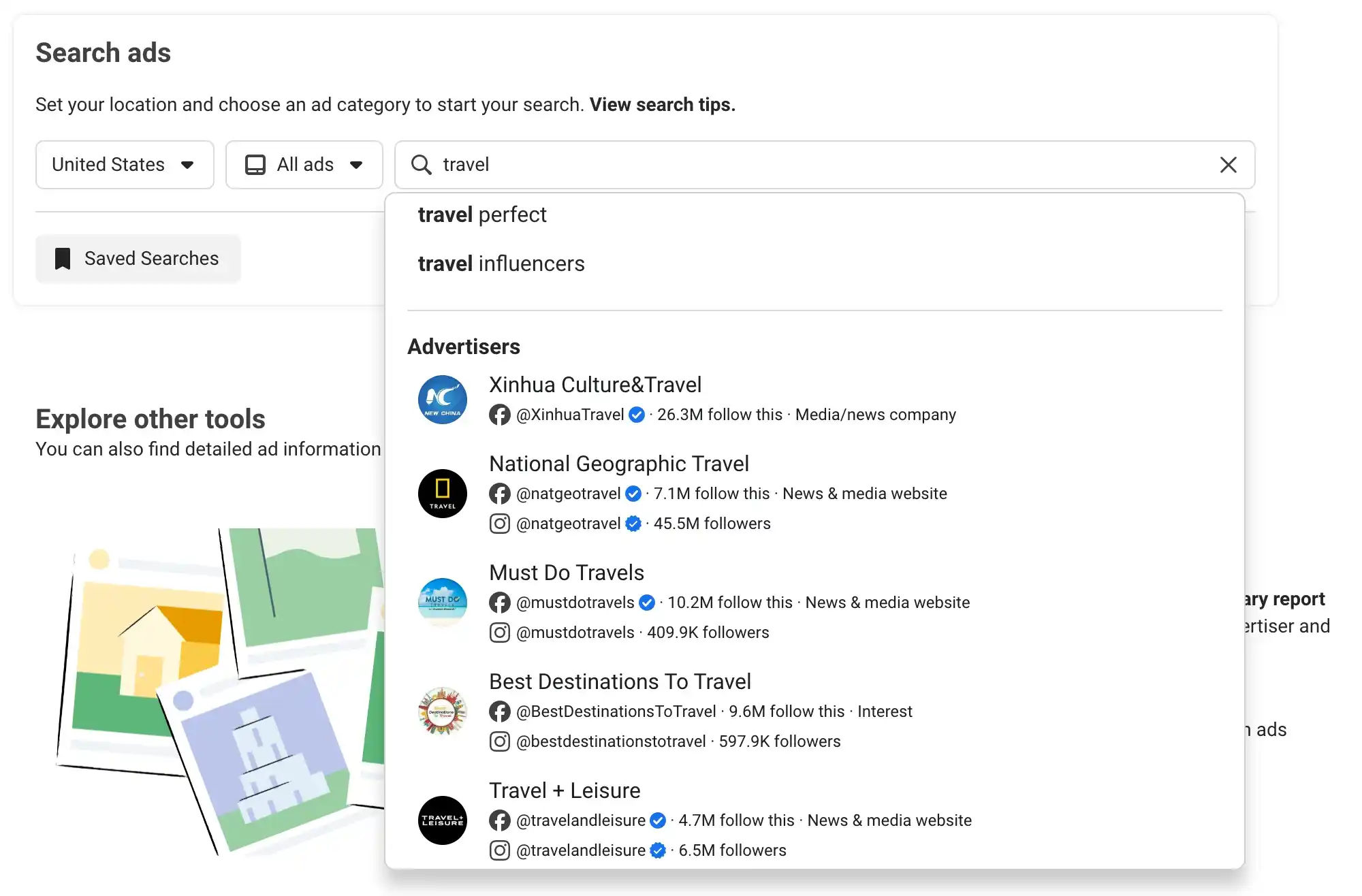
A killer offer, such as a bundled starter kit or a genuine limited-time bonus, will naturally lower your cost because the algorithm sees a high conversion probability and rewards you with cheaper impressions.
Improve Landing Page Conversion Rate
CPA reflects everything after the click. Through the Conversions API (CAPI), Meta knows where the drop-off occurs. If your landing page takes four seconds to load or has a confusing mobile checkout, your User Value score will bottom out.
Many accounts have lowered their CPA by 30% without changing a single ad, just by optimizing for thumb-friendly mobile design and improving site speed.
If your page converts at 1%, you are forcing the algorithm to work harder than necessary. Improving the conversion rate to 2% or 3% can cut the effective acquisition cost dramatically without changing CPM or CPC.
Build a Testing Roadmap
A structured testing roadmap, often called a "High-North Star" framework, allows you to isolate variables. Instead of launching random ads, test one variable at a time:
- 3–5 hook variations
- 2–3 message angles
- 1–2 offer framings
- Format adaptations (Reels vs Feed)
This diagnostic approach ensures that your cost is being spent on finding out why something works. Once you identify a hook with a 30%+ Stop Rate, you can scale it with confidence, knowing the math supports the spend.
Clean Up Your Campaign Structure
Messy campaign structures increase volatility. If your account is cluttered with 15 different campaigns and 50 ad sets, you are fragmenting your signal. This forces each ad set to go through its own learning phase, which significantly inflates your costs.
To lower costs fast, consolidate your structure. Use Advantage+ Shopping Campaigns (ASC) for prospecting and a single manual campaign for specific testing.
By funneling all your data into fewer buckets, you help the algorithm reach the 50-conversions-per-week threshold faster, which triggers the stability discount in the auction and levels out your daily spend.
Common Mistakes That Make Instagram Ads Expensive
Advertisers overpay for their results because they introduce friction into the Meta auction. If you find your digital marketing cost increasing despite having good creative, it is likely due to structural or strategic leaks that signal low confidence to the algorithm.
Here are the mistakes I see most often when auditing social media accounts.
Boosted Posts and Random Objectives
The Boost Post button is the most expensive way to buy attention on Instagram. When you boost a post, you are typically optimizing for Engagement (likes, comments, and shares) rather than Conversions.
Meta is excellent at finding what you ask for; if you ask for likes, it will serve your ad to "serial likers" who rarely buy anything, creating a blurry-metric trap where your cost looks low on paper, but your actual revenue is nonexistent.
Pro tip: Always use the full Ads Manager because it has 100x more options to optimize your Instagram ads.
Changing Things Too Often
The Andromeda update has made the learning phase more sensitive to manual interference. Every time you change a budget by more than 20%, swap a headline, or toggle a targeting setting, you reset the algorithm's predictive modeling. This tinkering prevents the ad set from reaching the 50-conversions-per-week threshold required for stability.
Media buyers who day-trade their accounts usually see a 30% higher CPA than those who let their campaigns run for at least seven days before making a diagnostic decision. Patience could, quite literally, be a cost-saving measure in this scenario.
Over-Retargeting and Under-Prospecting
A common mistake people make is spending 40% or more of their budget on retargeting "warm" audiences. While these campaigns might show a high ROI on paper, they are often just claiming credit for people who were going to buy anyway.
Smaller retargeting pools lead to high frequency and high CPMs, which essentially taxes your existing customers. I’d say the most efficient accounts spend 80% to 90% of their budget on prospecting (Broad or ASC), allowing the AI to find new customers, which provides the volume needed to lower the overall account CPA.
Related article: Is Facebook Advertising Still Worth It in 2026?
Trusting ROAS Without Margins
Return on Ad Spend (ROAS) is a deceptive metric if it isn't viewed alongside your contribution margin. A lot of brands scale ads that show a 3.0x ROAS only to realize they are losing money after accounting for COGS, shipping, and video creation costs.
The auction doesn't care about your profitability; it really only cares about your bid. If you scale based on gross ROAS without understanding your break-even point, you can quickly dig yourself into a hole.
Successful operators optimize for Marketing Efficiency Ratio (MER) or Profit on Ad Spend (POAS) to ensure that their Instagram growth is actually sustainable.
The Key Takeaways
Lowering your Instagram ad costs means you have to align your business economics with Meta’s auction logic. If you treat the algorithm as a partner rather than an adversary, you start to see that high CPMs are almost always a diagnostic signal.
They tell you when your creative has lost its resonance, when your offer lacks a competitive edge, or when your technical tracking is creating a signal gap. The goal of a seasoned strategist is to remove that friction so the AI can do what it does best: find high-intent buyers at scale.
After managing campaigns across industries for years, I’ve learned that efficiency has mostly got a lot to do with structure. If your account is disciplined, your creative is refreshed consistently, and your funnel converts cleanly, Instagram becomes a scalable acquisition channel rather than a volatile expense.
Why Did My Instagram CPM Suddenly Spike This Month?
A CPM spike usually indicates a sudden drop in your "Total Value" score or a seasonal influx of auction competition. When your creative hits a fatigue threshold and the engagement rate drops, Meta increases your costs to compensate for the lower user value.
Alternatively, if you are running ads during a major retail holiday or a high-traffic election cycle, you are simply paying the market premium for limited inventory.
Are Reels Ads Cheaper Than Feed Ads in 2026?
Reels ads generally offer lower CPMs because Meta is aggressively expanding inventory in that format to keep users on the platform. While the cost to reach a thousand people is often 30% to 50% cheaper on Reels, the intent can be lower than the Feed. You will likely see more affordable impressions, but you must ensure your creative is strong enough to convert a passive scroller into a buyer.
How Much Should I Spend per Day to Get Reliable Data?
You should spend enough to generate at least two to three conversion events per day per ad set. If your target CPA is $50, a daily budget of $100 to $150 is the minimum required to give the algorithm enough "signal" to move out of the learning phase.
Spending less than this often leads to data fragmentation, where your results remain volatile because the machine doesn't have enough proof of success to optimize.
Why Are My Leads Cheap but Low Quality?
Cheap, low-quality leads are often the result of using on-platform "Instant Forms" with pre-filled data and no friction. When the barrier to entry is too low, you attract accidental sign-ups from users who aren't truly interested in your offer.
Adding a custom question to your form or a "slide to submit" feature can increase your lead cost slightly, but significantly improves the actual social media marketing ROI by filtering for intent.
Does Retargeting Still Work, or Is It Mostly Inflated ROAS?
Retargeting still works, but its impact is often exaggerated by "view-through" attribution, where Meta claims credit for a sale that would have happened anyway. In the 2026 privacy landscape, small retargeting audiences often suffer from high frequency and high CPMs.
Most seasoned buyers now rely on Broad prospecting to do the heavy lifting and use retargeting only as a small "reminder" layer rather than a primary growth driver.
How Fast Can I Lower My CPA if I Fix Creative and Landing Pages?
You can see a noticeable drop in CPA within 48 to 72 hours of deploying a superior creative concept or a high-converting landing page. Because Meta’s auction is live and reactive, the Andromeda algorithm will immediately detect an improvement in your click-through rate and conversion probability.
As your "User Value" score rises, the auction rewards you with a lower PPC cost and more efficient delivery almost instantly.
What Attribution Setting Should I Use?
The industry standard for most brands remains "7-day click, 1-day view." This setting provides a balanced view of how your ads influence behavior over a week while still capturing the immediate impact of visual impressions.
If you have a high-ticket item with a long consideration cycle, you might benefit from a longer window, but for most advertisers, this default setting provides the cleanest data for the algorithm to optimize.
How Many Creatives Should I Test per Week?
A healthy testing cadence for a scaling account is three to five new "concepts" per week. Testing is about testing entirely different angles, such as a "Problem/Solution" video versus a "Social Proof" compilation.
This high-velocity approach ensures you always have a winning asset ready to step in when your current top-performer begins to fatigue and drive up your video creation cost.
Why Do My Ads Get Clicks but No Conversions?
This is usually a message-to-market mismatch or a failure of the landing page. If your ad is promising a specific benefit or price that isn't immediately obvious when the user clicks through, they will bounce.
High clicks with low conversions suggest that your digital marketing cost is being wasted on "curiosity seekers" rather than buyers, indicating you need to make your ad more specific or your website more persuasive.
Should I Run Instagram Ads Alone or Combined With Facebook?
It depends on your goals and audience. However, you should almost always run them combined using Advantage+ Placements. By allowing Meta to distribute your Instagram and Facebook advertising costs across both platforms, you give the AI the flexibility to find the cheapest conversion regardless of where the user is.
The algorithm is highly efficient at cross-platform attribution; restricting it to Instagram only usually results in higher CPMs as you limit the machine's ability to find liquidity in the auction.



Head of Content at Feedbird, where she helps thousands of small businesses turn social media into a steady source of customers. Ten years in content and SEO, still obsessed with what actually makes people click.