


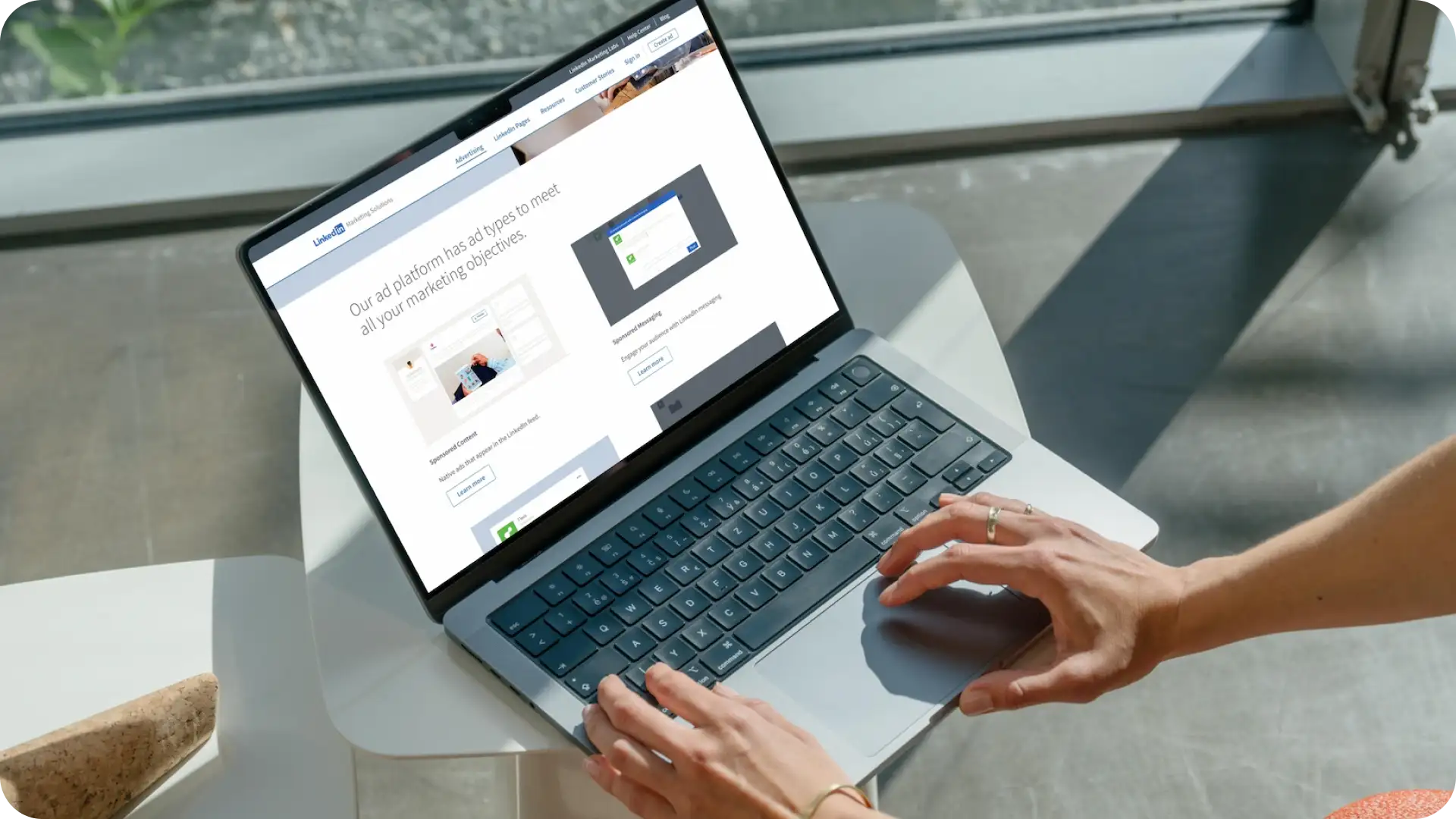

The average LinkedIn advertising costs vary between $8 and $15 per click. If you pay per 1,000 impressions (CPM), expect to spend anywhere from $35 to over $100, depending on the seniority of the professionals you target.
The platform mandates a $10 minimum daily budget, but a viable B2B lead generation campaign requires a starting allocation of at least $1,500 to $3,000 per month to gather enough performance data.
In this guide, I will explain what the top cost drivers are, provide the common benchmarks, and discuss potential ways to lower your acquisition costs. Ready? Let’s get into it!
Need help? Contact our social media agency
LinkedIn Advertising Cost in a Table
I believe founders need a clear view of some important metrics before they allocate thousands of dollars to a new channel.
It’s very important to understand your required financial commitment so you can forecast your overall PPC cost accurately, ensuring you do not pause campaigns prematurely just as they start generating qualified meetings.
The table below outlines the average costs across the most common bidding models and ad formats on the platform.
The Biggest Cost Drivers
The platform operates a live bidding auction where you compete against thousands of other B2B advertisers for limited screen space. Your final bill depends on who you want to reach and how aggressively you pursue them.
Here are the top four factors that manipulate your campaign expenses daily:
Audience Choices that Raise Costs Fast
The single most expensive mistake advertisers make involves exclusively targeting the C-suite. Everyone wants to sell to Chief Executive Officers and Vice Presidents of Information Technology.
Since these highly desirable decision-makers make up a tiny fraction of the user base, the sheer volume of advertisers bidding for their attention forces the cost per click to maximum levels.
If you only target these senior roles, expect your click prices to easily exceed $20.
You secure much cheaper traffic by targeting directors or senior managers who heavily influence the final purchasing decision but face significantly less advertising competition.
Also read: Is Google Ads Worth It in 2026?
Targeting that Looks Smart but Burns Budget
The platform offers incredible filtering options, tempting marketers to build hyper-specific audiences. You might combine job titles, company revenue, specific university degrees, and user skills into one campaign.
While this looks highly strategic on paper, over-segmenting your audience destroys your budget.
When you narrow your audience size below 50,000 users, the algorithm struggles to deliver your ads efficiently. The system penalizes this micro-targeting by drastically increasing your CPM.
To maintain a reasonable cost per acquisition, we always advise our clients to keep their audience size between 80,000 and 120,000 professionals.
Placement and Format Choices
The physical format of your advertisement defines the cost. Video ads and Document ads typically require a higher investment to generate engagement compared to standard Single Image ads.
Furthermore, where your ad appears matters immensely. The LinkedIn Audience Network distributes your campaigns to third-party partner websites and mobile apps.
While this placement lowers your overall click costs, my clients often report a massive drop in lead quality from these external sites. So, buying premium inventory directly in the main news feed costs more upfront but almost always yields a superior return on investment.
Seasonality and Market Competition
B2B buying cycles trigger massive price changes throughout the calendar year. During the final weeks of every fiscal quarter, software companies and agencies selling digital marketing services flood the network with aggressive budgets to hit their revenue targets.
The sudden influx of capital temporarily spikes the baseline auction prices.
I see this peak intensely in November and early December as brands rush to spend their remaining annual budgets.
If you launch a new campaign during these high-competition windows, you will pay a premium for every impression. Planning your major brand awareness pushes during slower periods, like mid-summer, helps you acquire market share at a significant discount.
Related article: LinkedIn Sponsored Content
LinkedIn Ad Formats (How Each One Tends to Behave in Terms of Cost)
The physical format you choose defines your overall expenses. The platform algorithms prioritize different formats based on user engagement trends. This means you pay a premium for ad types that demand more attention.
Cost Control Tactics that Don’t Kill Performance
When managing high-spend accounts, we constantly look for ways to trim wasted spend without choking the campaign's reach. You must strike a balance between strict financial boundaries and giving the algorithm enough data to find buyers.
The most profitable accounts use subtle restrictions rather than aggressive budget cuts to lower their acquisition expenses.
Frequency Control and Fatigue Prevention
Running the same creative asset indefinitely destroys your return on investment. As your target audience sees the same image repeatedly, they stop clicking.
The platform recognizes this drop in engagement and penalizes you by increasing your cost per click to maintain your ad placement.
An ad frequency of five to nine views over 30 days represents the sweet spot for maximizing conversions and brand resonance. Once your frequency pushes past that threshold, banner fatigue sets in, and your costs skyrocket.
Also read: LinkedIn Content Marketing
Smart Retargeting without Creepiness
Capturing a prospect on their first visit rarely happens in B2B buying cycles. You need to build a dedicated retargeting audience to bring them back.
Brands waste thousands of dollars aggressively serving hard-sell demo requests to users who only briefly summarize a blog post. This approach alienates potential buyers and burns through your daily budget.
Instead, you must align your retargeting message with the user's previous behavior. If someone downloaded a whitepaper, serve them a related case study next.
The strategy maximizes the return on your initial content marketing cost by naturally guiding the prospect down the funnel.
Lead Quality Filters that Don’t Tank Volume
Many advertisers try to improve lead quality by aggressively narrowing their target audience. As I discussed earlier, pushing your audience size too small triggers a massive penalty in your CPM. You must maintain a healthy pool of users while keeping unqualified clicks out of your funnel.
The secret lies in negative targeting. Instead of demanding the algorithm only find specific, rare job titles, start with a broad seniority level like "Directors and above."
Next, actively exclude specific job functions, competitor company names, or unrelated industries that historically waste your sales team's time.
Audience Design that Stays Broad but Still Relevant
Our clients often want to target hyper-specific personas, like "Vice Presidents of Marketing at enterprise software companies using Salesforce." Building an audience with that many restrictions guarantees you will pay maximum auction prices.
The system struggles to locate these specific individuals at any given moment, forcing you to bid aggressively for limited ad inventory.
You achieve much cheaper clicks by using broader, overlapping attributes. Target the software industry and focus on the marketing department as a whole, rather than isolated executive titles.
Let your ad copy and creative act as the final filter.
By writing a headline that specifically calls out "Enterprise VPs of Marketing," you naturally deter junior employees from clicking.
LinkedIn Ads vs Other B2B Channels
Clients often ask if they should divert their LinkedIn budget toward cheaper platforms. Each channel serves a distinct role in your marketing funnel, and comparing them purely on click prices leads to poor capital allocation.
Google Ads captures high-intent search traffic brilliantly, but it fails when buyers do not actively search for your specific solution. Meta platforms offer massive reach.
When calculating your overall social media marketing costs, combined with Facebook and Instagram advertising costs, you will almost always find a lower CPC.
However, the B2B lead quality on Meta rarely matches the precise targeting available on a dedicated professional network.
Traditional outbound sales motions present a very low software cost, but they demand immense human capital and time to secure booked meetings.
LinkedIn bridges these strategies perfectly. It offers the proactive targeting of cold outreach paired with the visual engagement of social media, all backed by verified professional data.
Agency Management Costs for LinkedIn
Factoring in the human element of your campaign is just as critical as your daily ad budget. Paying an expert team to design creatives, monitor bid caps, and refresh targeting lists falls under your overall social media marketing management cost.
Most seasoned agencies charge a flat monthly retainer ranging from $2,000 to $6,000, or a percentage of your total ad spend once budgets scale higher.
It’s very important to consider that the standard digital marketing agency pricing ensures you allocate enough capital for direct media buying, rather than launching an underfunded campaign because administrative fees consume your budget.
The table below breaks down the most common billing structures for running these specific campaigns.
The Bottom Line
Mastering B2B acquisition on LinkedIn requires treating your ad spend as an investment in a highly qualified pipeline. When you align your targeting strategy with your core sales cycle, the initial click prices matter far less than the recognized revenue those meetings generate.
I firmly believe building a mathematically sound campaign ensures you acquire premium market share without burning through your capital.
To secure high-value conversations while aggressively protecting your core media budget, you need to maintain strict financial parameters and optimize for lead quality over raw volume.
What Is a Normal CPM on LinkedIn?
A standard CPM on LinkedIn ranges from $35 to $55 for broad professional audiences. However, this number spikes well over $100 when clients target narrow, highly competitive segments like enterprise C-suite executives.
The platform penalizes hyper-specific targeting, so maintaining an audience size above 50,000 users helps keep your impression costs stable and your budget healthy.
Why Are LinkedIn CPCs Higher Than Facebook?
You pay a premium on LinkedIn because of the deterministic data quality. While Facebook advertising cost relies on behavioral assumptions and inferred interests, LinkedIn allows you to target users based on verified, self-reported resumes.
When you buy a click here, you know you are reaching a Director of IT at a company with over $10 million in revenue, whereas cheaper networks cannot guarantee that level of professional accuracy.
Are LinkedIn Lead Gen Forms Cheaper Than Landing Pages?
Native Lead Gen Forms drastically lower your overall cost per acquisition.
The reason is that these forms auto-populate with the user's profile data and keep them inside the app environment; the conversion rate is significantly higher than sending traffic to an external website.
What Is a Good Cost per Meeting for LinkedIn Ads?
For B2B software and service companies, a healthy cost per booked meeting typically sits between $250 and $500. This metric depends entirely on your target audience's seniority and your product's lifetime value.
A $500 meeting cost sounds expensive on the surface, but if that prospect signs a $50,000 annual contract, the channel becomes highly profitable. Always judge your campaign success by closed pipeline revenue rather than the raw cost of the initial calendar invite.


